Fourteen moissanite along the crossbar was never what made this piece work. Here is what happens when you take them away.
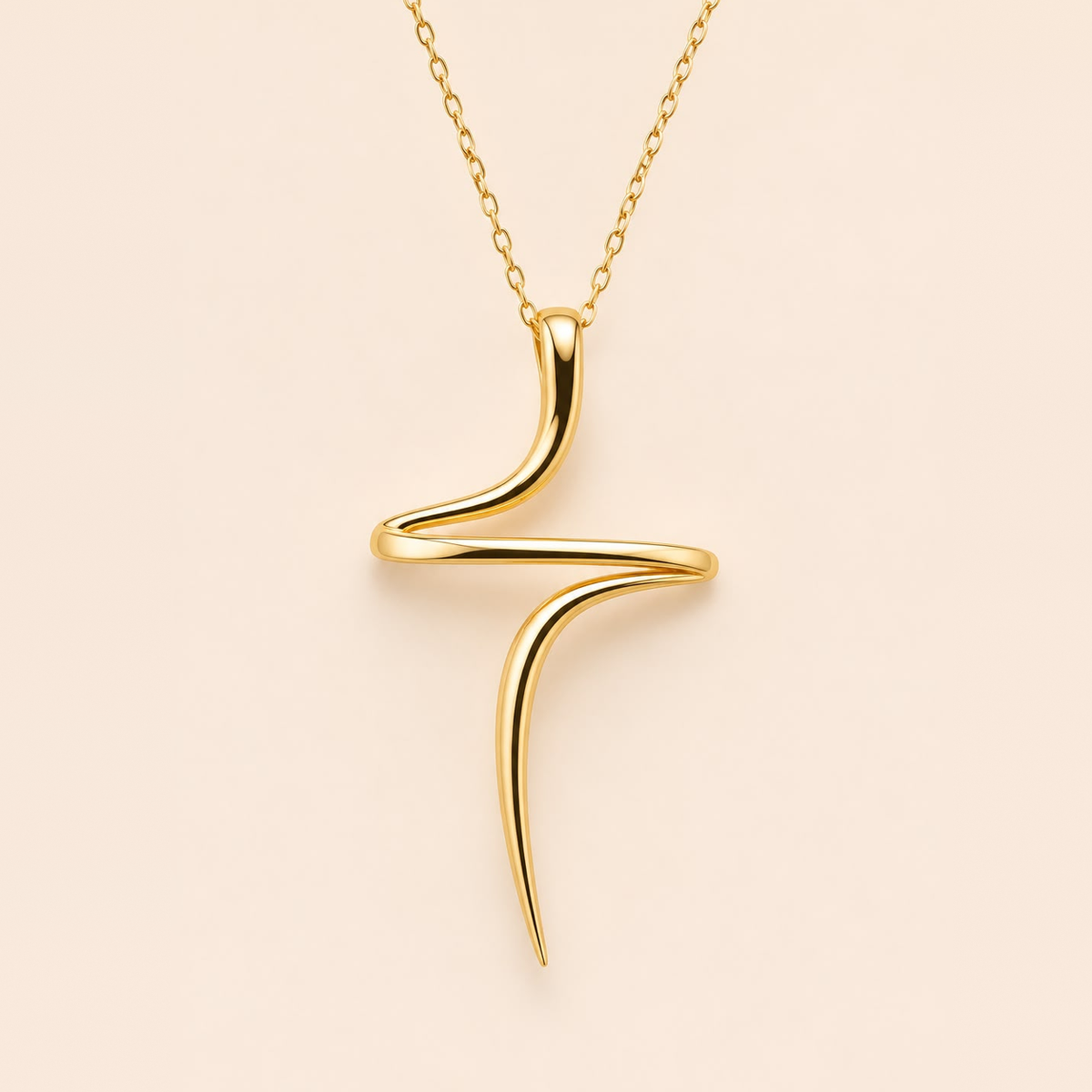
The cross was drawn before anyone thought about stones. One line, rising, turning, falling away to a point. The stones came later, set into the bar the turn makes, and they earned their place. They catch light at the one spot on the piece where light already wants to gather.
But a shape that only works because of what is set into it is not much of a shape. We wanted to know whether this one stood up on its own, so we had it made again with the channel closed and the crossbar left solid. No seat, no grain beads, no groove. Just polished metal where the stones used to sit.
A shape that only works because of what is set into it is not much of a shape.
It stands up. If anything the line reads more clearly without them, because nothing interrupts the eye as it travels along the turn. The piece stops being jewellery with stones in it and becomes a form you happen to be wearing. Across a room it is quieter. Up close it is the same object.
The two are not a better and a worse version of each other. They are two readings of one drawing. The set version is the one that announces itself, and it is the one most people reach for when a piece is being given rather than bought. The solid one is for anybody who liked the shape first and would rather nothing competed with it.
Everything else is identical. The same 925 sterling silver, the same two microns of 14ct gold in yellow or white, the same 16 inch chain with its 4 inch extender, the same box, the same mark running down the back of the stem where only the wearer finds it.
It costs less, which is simply what happens when fourteen stones and the hours of hand setting that go with them come out of a piece. It is not a compromise and we would rather you did not read it as one. Choose the one you would still want if nobody ever asked you about it.